

You deserve a tax system that treats you right.
Just like the date who never texted back, Australia's tax and transfer system isn't giving you what you deserve. Use Tax Match and, in just a few swipes, decide which tax and transfer policies deserve your love, and which ones are taking you for a ride.
Play Tax MatchNice One!
You pay $18,338 at an effective rate of 23%
*from 1 July 2027 this number will include the $250 Working Australians Tax Offset.
Your tax dollars fund the critical public services that support your community. So if tax is meant to be such a supportive partner… why does your life together feel so hard?

* This estimate is based on 2026–27 tax settings and may not reflect your exact situation. It’s intended as a guide only and does not constitute tax advice.
When we talk about the tax system, we mean the tax and transfer system. The tax system is made up of all the rules that govern how much revenue is collected from each of us. The transfer system is where all that revenue gets distributed - into our health care system, for example, with the goal of ensuring we all live in a secure society that reflects our priorities as a country.
Meet the other players in your tax love triangle
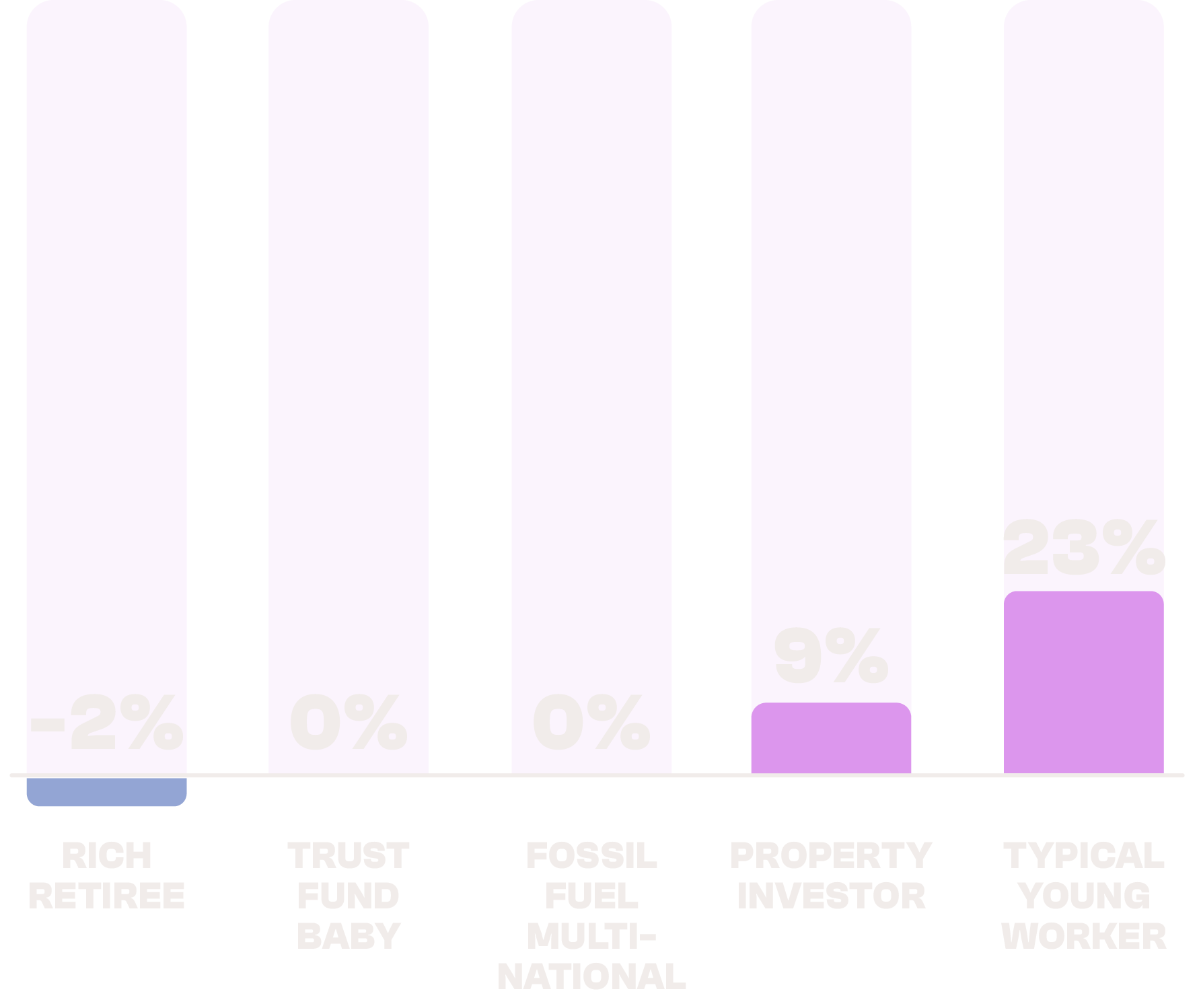
If you're a worker earning a wage, you’re likely paying more tax than people who receive their income from wealth. The wild thing is...they're playing by the rules. The rules just weren't written with you in mind. That's because the system is designed to reward wealth, not work.
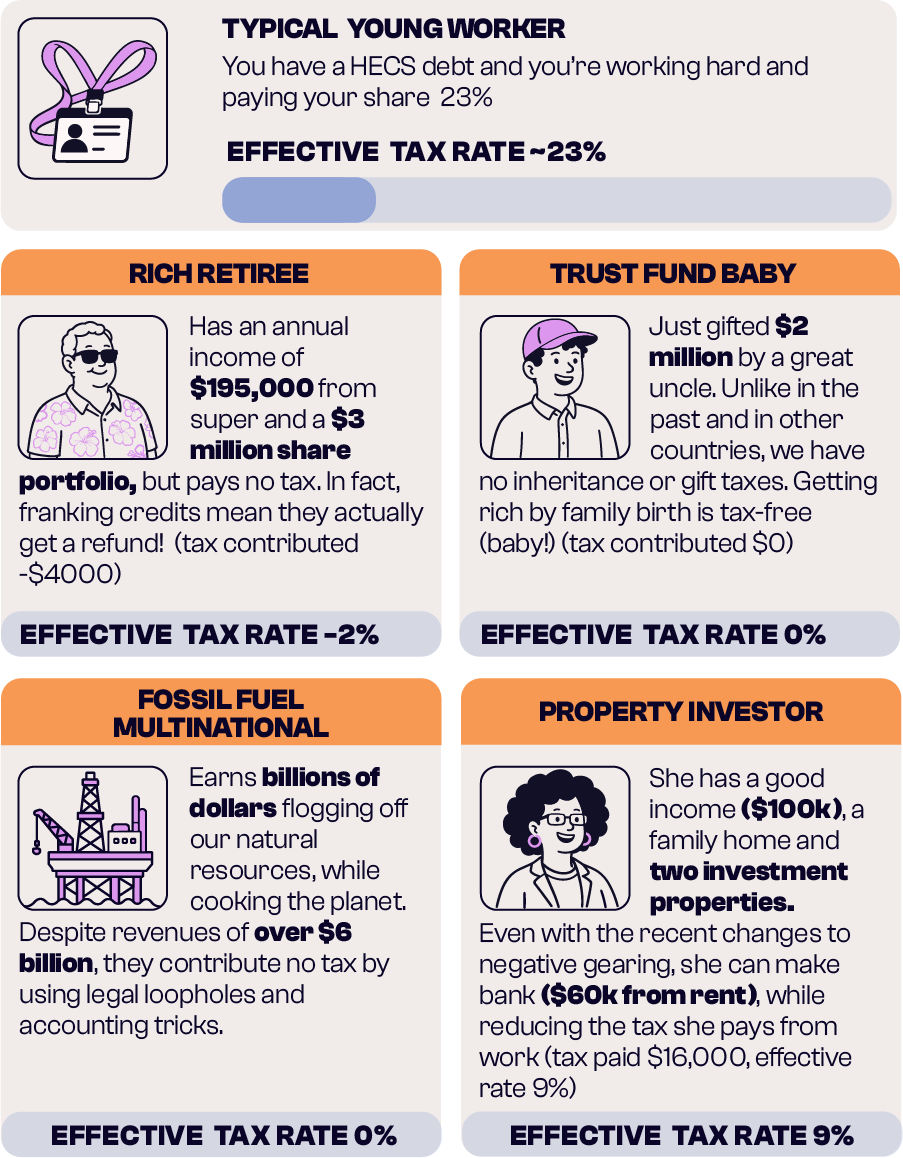
Now you’ve seen the lay of the land
We’ll introduce you to some of the biggest policy players - you decide whether to date or dump them.

At the end, we'll introduce you to your perfect Tax Match.
Click on "Learn More" throughout to up your tax literacy.
You just lifted a big financial burden for graduates!
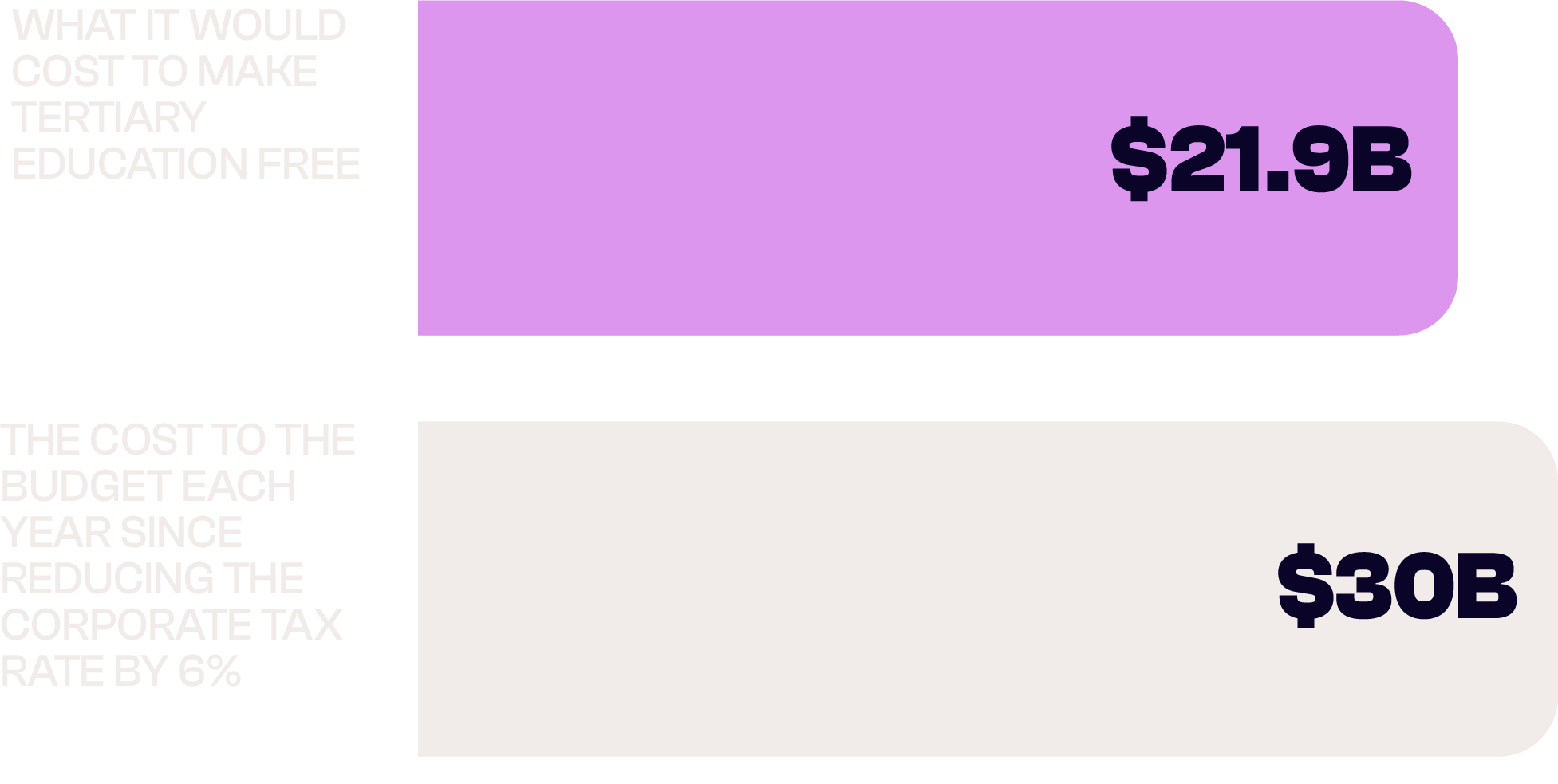
Every year, corporate tax cuts cost the budget $30 billion — more than it would cost to make tertiary education completely free. It seems like you’re also wondering why $30 billion for corporations that are already profitable made the cut, while $21.9 billion to stop taxing 18-year-olds into their thirties doesn't.
Degree prices have climbed sharply. A Bachelor's degree in some fields, like arts, now costs well over $50,000. That's the real driver behind the financial stress HECS debts are causing graduates. And here’s the irony - In 2000, the same Howard Government that deregulated university fees also cut the corporate tax rate from 36% to 30%. Since then, student contributions for many degrees have climbed by up to 6.2 times, while graduate salaries have only grown 2.5 times over the same period. Lower costs could mean lower repayments - but instead, the businesses that require these degrees to hire us are paying less tax than they were 25 years ago, while the graduates producing the workforce they rely on are paying dramatically more.
Are you sure you’re prioritising the right needs?
Every year, corporate tax cuts cost the budget $30 billion — more than it would cost to make tertiary education completely free. We're not asking for new money. We're asking why $30 billion for corporations that are already profitable makes the cut, while $21.9 billion to stop taxing 18-year-olds into their thirties doesn't.
Degree prices have climbed sharply. A Bachelor's degree in some fields, like arts, now costs well over $50,000. That's the real driver behind the financial stress HECS debts are causing graduates. And here’s the irony - In 2000, the same Howard Government that deregulated university fees also cut the corporate tax rate from 36% to 30%. Since then, student contributions for many degrees have climbed by up to 6.2 times, while graduate salaries have only grown 2.5 times over the same period. Lower costs could mean lower repayments but instead, the businesses that require these degrees to hire us are paying less tax than they were 25 years ago, while the graduates producing the workforce they rely on are paying dramatically more.
You really want to cover the whole bill?
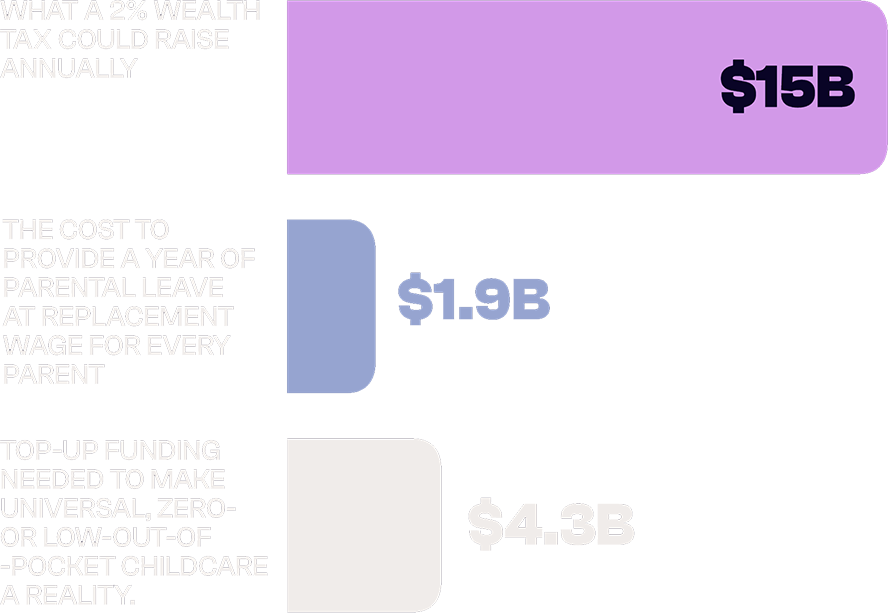
A 2% wealth tax could fund a suite of world class benefits, like dental in medicare or a year of paid parental leave for every parent at replacement wage. It could provide the amount of social housing we require 37 times over but most importantly, it would ensure that billionaires would pay as much tax as the middle class, relative to their income. Are you sure you don’t want the billionaires to pay their fare share of the dinner date?
You just married rich baby!
A 2% wealth tax could fund a suite of world-class benefits, like dental in medicare or a year of paid parental leave for every parent at replacement wage. It could provide the amount of social housing we require 37 times over but most importantly, it would ensure that billionaires would pay as much tax as the middle class, relative to their income. Now that’s a tax worth making a life-long commitment to.
You just dumped a very expensive date…
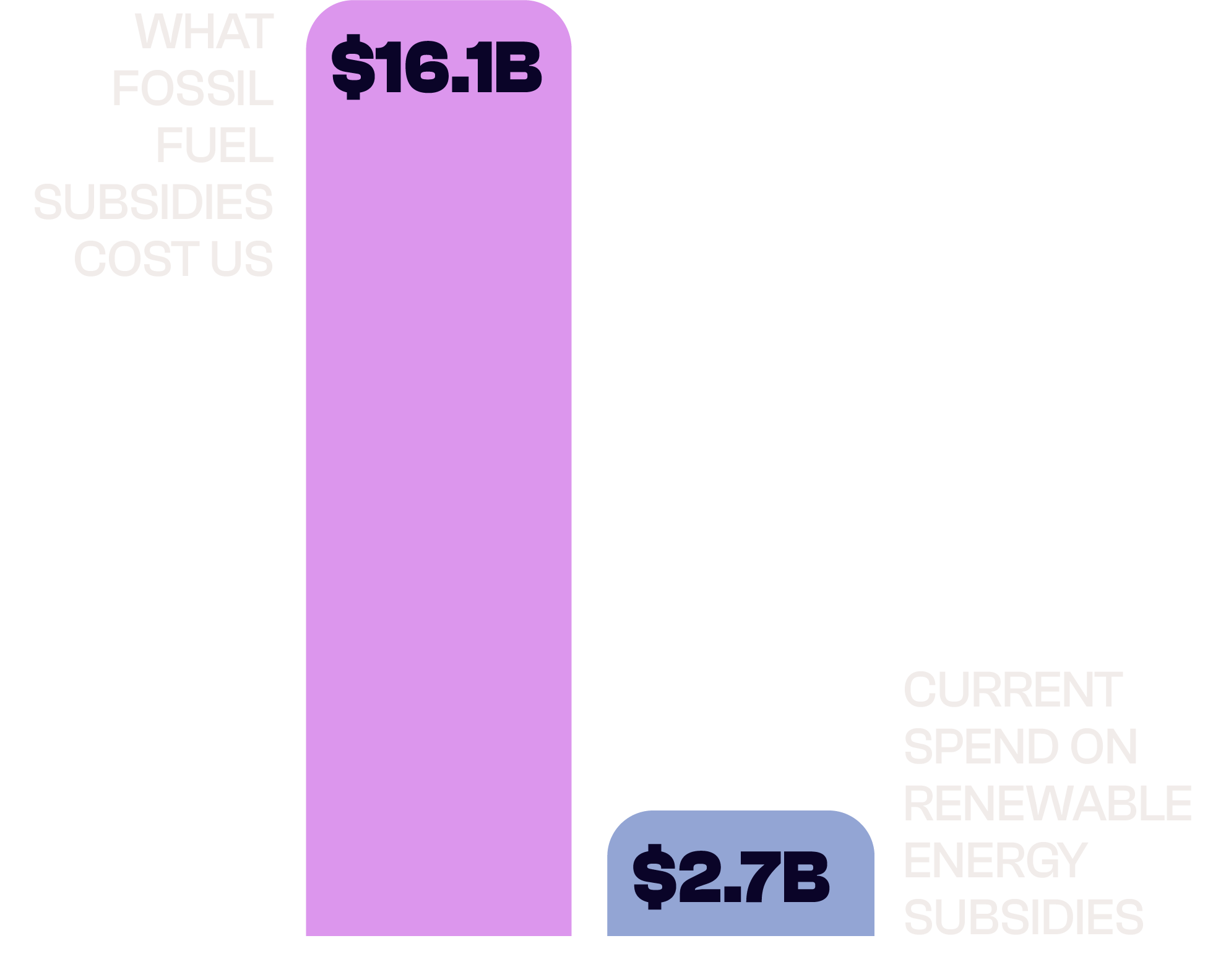
$16.1 billion is the equivalent of every Aussie taxpayer handing over almost $1,000 a year to fossil fuel companies, who then make exorbitant profits from our resources. Scrap the handouts, and we could put that money towards solar panels, electric cars, or cheaper energy bills instead, leaving everyone better off.
You have very expensive taste…
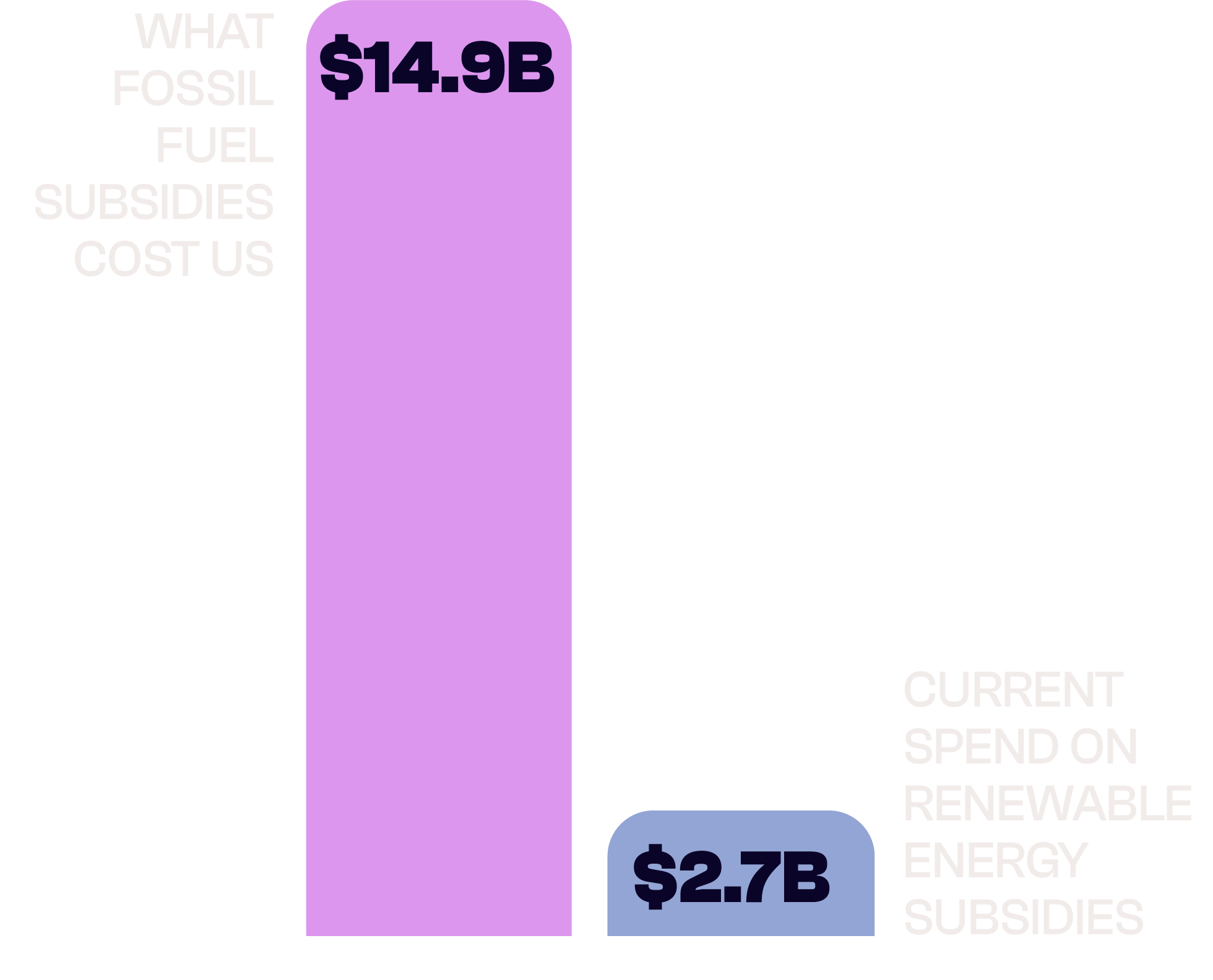
$16.1 billion is equal to every Aussie taxpayer handing over $1K a year to fossil fuel companies, who then make insane profits from our resources. Meanwhile, we underinvest in the clean energy transition. Are you sure we’ve got our priorities in order?
Are you really okay with letting the free-riding continue?
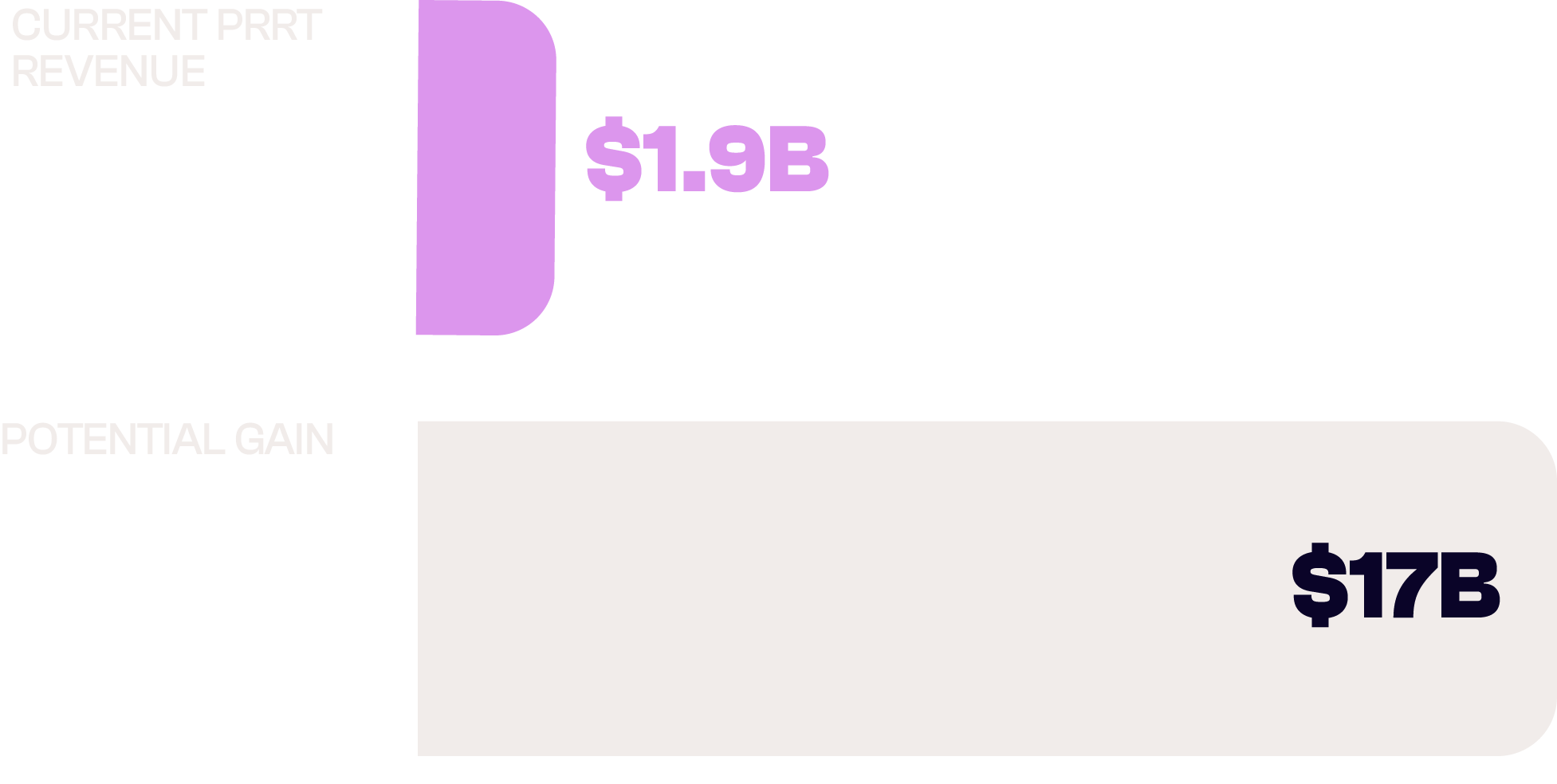
By keeping the PRRT exactly as it is, we are essentially giving our gas away for a fraction of its value. Most of our gas belongs to the public, yet we receive less for it than countries like Qatar or Norway, who have much tougher tax systems. Are you sure you're okay with gas giants getting a "mates' rates" discount on our most valuable resources.
You’ve chosen a provider!
If we replaced the broken PRRT with a simple 25% royalty on gas exports, we could raise over $17 billion a year. That’s enough to invest in all kinds of things. We could ‘pay the rent’ to First Nations’ communities ($0.17B) while properly funding the arts ($2.5B) and add more mental health services to medicare ($0.7B).
We could even use it to pay down our national debt, Instead, we let that money go into the pockets of offshore shareholders.

Thanks for playing Tax Match.
Based on your swipes, we've worked out exactly who you're looking for.
You’re looking for a...
Full Overhaul

You want fairness, stability and sparks.
You want tax policies that respect you, treat you fairly and give back. Reforming all these policies means you’ve made the system fairer and added $26.2 to the Budget to invest in everyone’s quality of life and create the kind of society we’d love to live in. Where hard work and effort are rewarded, where we can afford the essentials, buy a home, care for our loved ones and maybe even have some money left over to enjoy.
You’re sitting...
On the Fence

You flirt with loopholes but deep down know they’re bad for you.
You’re tempted by some perks - but remember: as long as loopholes stay open, a lot of people will fall through the cracks.
You’ve made some great changes, but remember, reforming all these policies would mean billions to invest in everyone’s quality of life and create the kind of society we’d love to live in. Where hard work and effort are rewarded, where we can afford the essentials, buy a home, care for our loved ones and maybe even have some money left over to enjoy.
For you, it’s...
Love at First Sight

You think the system’s perfect.
Spoiler: it mostly serves the
wealthy few.
For everyone else, it’s a rigged game.
As long as you can sleep at night...
Reforming all these policies would return $26.2b to the budget to improve everyone’s quality of life and create the kind of society we’d love to live in. Where hard work and effort are rewarded, where we can afford the essentials, buy a home, care for our loved ones and maybe even have some money left over to enjoy.

Make your move
If you want to:
- Tax wealth like work
- Reduce the load on people starting out their lives
- Repair budgets so we can invest in the services everyone needs
Sign our open letter today!
Learn more about us